

Chilean oysters are a prized mollusk worldwide for their delicate flavor and tender texture, often enjoyed raw. Adding a splash of fresh lemon juice can enhance the taste and complement the gastronomic experience.
Nutrition Facts
Each serving of oysters with lemon contains approximately 150 kcal, 14 g of protein, 4 g of total fat, 6 g of available carbohydrates, 1 g of total sugar, and 500 mg of sodium.
How to Make Oysters with Lemon
Oysters with lemon is a simple recipe that allows you to appreciate the natural and fresh flavors of these Chilean mollusks, accompanied by freshly squeezed lemon juice and a pinch of salt and pepper.
Prep Time: 30 minutes
Servings: 2
Ingredients
- 24 fresh oysters
- 4 lemons
- Sea salt
- Pepper
- Ice cubes

Instructions
- Rinse the oysters under cold water and gently brush them to remove any dirt or algae. Using an oyster knife, shuck the oysters by carefully removing the top shell and cleaning the oyster meat and shell of any residue they may have.
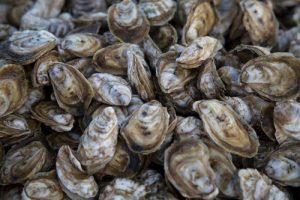
- Spread the ice over a large serving dish, place the shucked oysters, squeeze a generous amount of fresh lemon juice, and sprinkle a pinch of salt and pepper. Serve the oysters with lemon immediately using a small spoon and fork, optionally accompanied by a glass of white wine.
Secrets for a “High-Seas” Experience
- The Life Test: Before shucking, the oyster must be tightly closed. If you find one slightly open, give it a tap; if it doesn’t close immediately, discard it. A fresh oyster should smell like a clean sea breeze, never “fishy.”
- The Shucking Angle: Don’t force the knife. Insert it into the “hinge” (the point where the shells join) at a 45° angle. Once you feel it give, slide the knife along the side to cut the adductor muscle. Keeping the “liquor” (the internal water) is vital for the flavor.
- The Lemon Timing: Lemon juice is a powerful acid. Don’t add it too early, as it will begin to “cook” the delicate meat and change its texture. The secret is to squeeze it just a second before it reaches your mouth.
Frequently Asked Questions (FAQ)
1. Should I wash the inside of the oyster?
Never! Only brush the outside of the shell to remove sand or algae. The water inside the shell is pure “sea blood” and contains the mineral flavor that makes them famous.
2. What is the difference between Pacific and Flat oysters?
Pacific oysters are generally larger with irregular shells and a creamier taste. The flat oyster (or Chilean oyster) is circular, smaller, and has a much more intense, sophisticated metallic flavor.
3. Are they really an aphrodisiac?
Beyond the myth, oysters are incredibly high in zinc and omega-3 fatty acids, which support testosterone production and cardiovascular health. So, scientifically speaking, they do provide a vitality boost!
4. How should they be displayed?
The crushed ice isn’t just for show; it’s functional. It keeps the temperature between 0°C and 4°C, ensuring the meat stays firm and safe for raw consumption.
5. Can I cook them if I don’t like them raw?
Absolutely. While raw is the star, they are incredible grilled with a touch of garlic butter or baked “Rockefeller style” with spinach and cheese.
Benefits and Properties of Oysters
- Oysters are a good source of protein, iron, zinc, calcium, vitamin C, and vitamin B12, among other essential nutrients.
- They contain high levels of omega-3 fatty acids, which help lower bad cholesterol in the blood and reduce the risk of cardiovascular diseases.

Did You Know?
Chilean oysters are known for their unique flavor and high quality, with the country being one of the world’s leading producers, primarily of Pacific oysters and flat oysters.