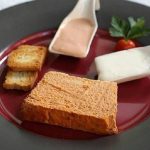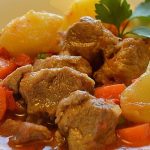
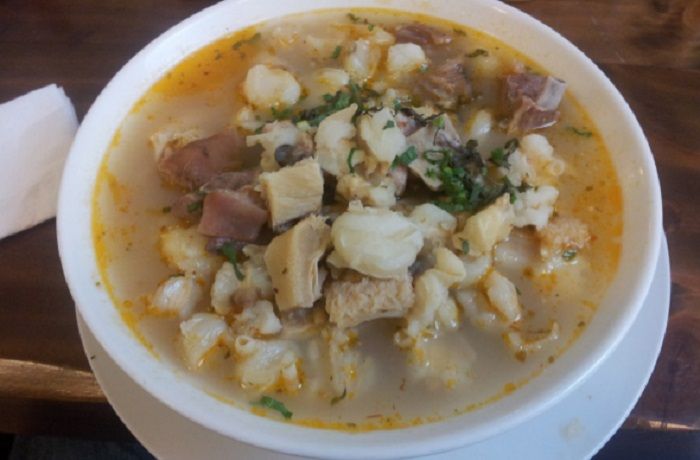
Patasca is a thick, hearty broth from northern Chile’s Atacama Region made with lamb, beef chitterlings, hominy soaked for 48 hours, and dried jerky—slow-cooked for two hours until the flavors meld into a deep, concentrated soup traditionally served at religious festivals. Patasca, or pataska, is especially consumed in the Atacama Region and belongs to a broader Andean culinary tradition shared with Argentina, Bolivia, and Peru.
Nutrition Facts
Each serving of patasca contains approximately 480 kcal, 47 g of protein, 21 g of total fat (6 g of saturated fat), 110 mg of cholesterol, 28 g of carbohydrates, 2 g of total sugars, and 470 mg of sodium.
How to Make Atacama Patasca
Patasca is a very popular broth in the Andean regions of Argentina, Bolivia, Chile, and Peru, generally made with beef, lamb, pork, or kid meat, which results in a very hearty, nutritious preparation with a great concentration of flavors.
Prep Time: 60 minutes
Cook Time: 150 minutes
Servings: 8
Ingredients
- 1 kg of lamb meat
- 1 kg of beef chitterlings
- 400 g of mote (hominy)
- 250 g of jerky (charqui)
- 250 g of cooked potatoes
- 250 g of cooked pumpkin
- 2 roasted yellow chili peppers
- 4 liters of water
- Garlic
- Cumin
- Pepper
- Salt
- Fresh oregano
- Parsley
- Vegetable oil
Instructions
- Soak the peeled mote (hominy) for at least 36 hours and ideally for 48 hours; drain the soaking water and set it aside. In a large pot, add the oil and heat over medium heat.
- Add the peeled garlic and the dried yellow chili peppers and cook until lightly browned, being careful not to burn them. Add the lamb meat and the chopped chitterlings into pieces, stir everything well with a wooden spoon, and sear the meat in the hot oil. Add the raw hominy and mix over low heat for 1 minute.
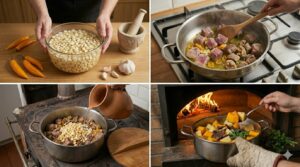
- Add the water and cover all the ingredients; cook for about two hours over medium heat until all the meat is tender. Add the pieces of cooked potatoes and pumpkins and cook for three or four minutes.
- Turn off the heat, and add the parsley, oregano, pepper, and cumin. Serve the patasca immediately on a deep and wide plate, very hot, optionally garnished with freshly chopped cilantro.
Expert tips
Preparing the chitterlings
To ensure a clean and balanced flavor, wash the beef chitterlings thoroughly and parboil them in water with a splash of vinegar for 10 minutes before slicing and adding them to the main pot. This removes excess bitterness while preserving their unique texture.
Getting the right hominy texture
Do not rush the soaking process. The 48-hour soak is essential for the hominy (mote) to reach its blooming stage. If the corn is not properly hydrated, it will remain tough even after hours of boiling, failing to release the starches that give the broth its signature thickness.
When to add herbs and seasoning
Add parsley, oregano, cumin, and pepper only after turning off the heat. Adding them during the boil causes their aromatic compounds to evaporate, resulting in a flat, one-dimensional broth. The residual heat is sufficient to release their flavor without destroying it.
Meat options for patasca
| Meat | Cook time | Flavor profile | Texture | Traditional use |
|---|---|---|---|---|
| Lamb | ~2 hours | Earthy, intense | Tender | Most common in Atacama |
| Beef chitterlings | ~2 hours | Rich, savory | Firm, gelatinous | Common complement to lamb |
| Pork | ~1.5 hours | Mild, sweet | Soft | Used in Bolivian/Peruvian variants |
| Kid (goat) | ~2 hours | Gamey, intense | Tender | Traditional in altiplano communities |
Frequently Asked Questions (FAQ)
1. Can I use canned hominy instead?
It is not recommended for this specific recipe. Traditional patasca requires raw, peeled mote that can withstand over two hours of simmering without turning into mush, which is vital for the dish’s rustic texture.
2. What is the best way to handle the jerky (charqui)?
Shred the jerky into small, thin strips. To intensify its smoky profile, you can lightly toast the shredded jerky in a dry pan before adding it to the broth.
3. Why did my broth turn out too greasy?
Lamb and chitterlings are naturally fatty. You can skim the foam and excess oil from the surface during the first 40 minutes of boiling to achieve a cleaner, more refined broth.
4. Can I cook patasca in a pressure cooker?
Yes, you can reduce the cooking time to about 50–60 minutes. However, the slow-cook method is preferred, as it allows the flavors of the different meats to meld more deeply.
5. What does the roasted yellow chili provide?
It offers a subtle, earthy heat and a beautiful golden hue to the liquid without making the dish overwhelmingly spicy.
History and Origin of Patasca
Patasca is a pre-Columbian preparation whose origins lie in the Andean cultures that inhabited the altiplano of present-day Bolivia, Peru, Chile, and Argentina. The name comes from the Quechua word “phatasqa,” which describes the process of cooking whole corn kernels until they bloom and split open—a technique that predates Spanish colonization by centuries. In the Atacama Region of northern Chile, the dish was adopted and adapted by the Atacameño (Lickanantay) people, incorporating local ingredients such as charqui (dried llama or beef), yellow chili peppers, and mountain herbs. After Spanish colonization, lamb and beef were incorporated into the recipe, creating the hybrid preparation still served today at religious festivals and community gatherings across northern Chile and the broader Andean region.
Did You Know?
The name “patasca” comes from the Quechua “phatasqa,” and it is a broth that was originally consumed in the high Andean areas of Argentina, Bolivia, Chile, and Peru.