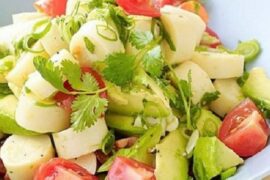

A fresh and delicious Chilean salad, also known as “ensalada chilena,” is ideal to accompany your best homemade national dishes, such as pastel de choclo (corn pie), roasted ribs, or lamb barbecue.
Nutrition Facts
Each serving of homemade Chilean salad contains approximately 100 kcal, 2 g of proteins, 8 g of total fats (1 g of saturated fats), 0 mg of cholesterol, 10 g of carbohydrates, 5 g of sugars, and 250 mg of sodium.
How to Make Chilean Salad
Preparing a good Chilean salad is really simple and relies on the freshness and quality of its main ingredients: tomatoes, onions, and cilantro, to which you can optionally add a touch of spiciness.
Prep Time: 10 minutes
Servings: 4
Ingredients
- 6 tomatoes
- 2 white onions
- 1 bunch of fresh cilantro
- 1 medium yellow or green chili pepper
- Sunflower oil
- Salt
Preparation
- Wash, peel, and cut the tomatoes into thin slices or medium wedges. Slice the onion thinly, soak it in cold water, and gently press to eliminate acidity. Set aside. Wash the cilantro and finely chop it.
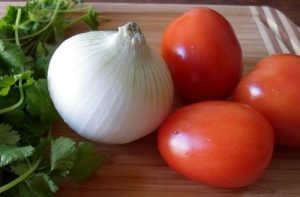
- Wash the chili pepper, remove the seeds, and dice it into small squares. Set aside. Arrange the tomatoes in a salad bowl or individual plates, season with oil and salt to taste, and top with the onion, chili pepper (optional), and cilantro.
Tips for a Perfect Chilean Salad
- Depending on the type of onion, it can be soaked or not, always trying to enhance its natural flavor without overshadowing the rest of the ingredients.
- Salting the tomatoes before combining them with the other ingredients will help release their natural juices and can provide an extra level of flavor.
- Using neutral vegetable oil instead of olive oil is traditional and recommended to allow the freshness of the ingredients to shine.
Frequently Asked Questions (FAQ)
1. Why is cilantro preferred over parsley?
Cilantro provides a citrusy, fresh note that balances the potency of the soaked onion. Parsley has a more earthy profile that doesn’t achieve the same refreshing contrast needed to accompany heavy meats like lamb or pork.
2. Should you add vinegar or lemon to Chilean salad?
Purist recipes do not include vinegar or lemon. The natural acidity of a ripe tomato should be enough. However, in some rural areas, a splash of red wine vinegar is added to enhance the flavor if the tomatoes aren’t sweet enough.
3. How do you prevent the onion from being too “sharp”?
In addition to the traditional soaking in cold water with salt, an expert trick is to let the onion sit in water with a few ice cubes. The thermal shock closes the layers of the onion and eliminates the strongest volatiles without losing its characteristic firmness.
4. Can I use red onions?
You can, but technically it would no longer be a traditional Chilean salad. White onions are chosen for their aesthetic (white and red like the flag) and because their flavor, once soaked, is milder and sweeter than red onions.
5. Why is peeling the tomatoes necessary?
Peeling the tomatoes allows the salt and oil to penetrate the fruit better, encouraging the release of juices. It also provides a much smoother, refined texture that doesn’t compete with the crunch of the onion.
Benefits of Consuming Tomatoes
- Its high iron content helps prevent anemia and maintain good overall blood health, preventing cardiovascular diseases.
- Tomato is an excellent diuretic due to its high potassium content and low sodium level, helping prevent fluid retention while aiding in toxin elimination.
- It has a high antioxidant content, which helps slow down cellular aging, making it a great ally for dental, skin, and hair care.
Did You Know?
The Chilean salad gets its name from the color combination of the salad—red from the tomatoes and white from the onions—resembling the Chilean flag, although the exact period when it emerged as a preparation is unknown.
How to adapt this recipe to a vegan or vegetarian version?
How to adapt this recipe to a gluten-free version?
How to adapt this recipe to a keto (ketogenic) version?
Recommended
- Homemade Dobladitas Bread
- Completo Italiano (Italian-Style)
- Chilean Milcao’s Chilotes Bread
- Homemade Amasado Bread Recipe