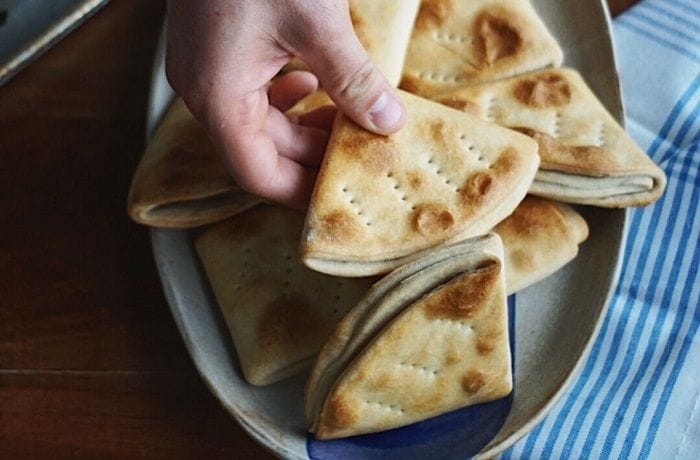
Chilean dobladitas are thin, flaky bread rolls made from empanada-style dough — rolled into circles, folded into quarters, and baked until golden. Ready in 50 minutes, this recipe yields 20–30 pieces traditionally served with mantecoso cheese for onces (afternoon tea).
Nutritional Information
Each serving of homemade Chilean dobladitas (approximately 3 small pieces) contains about 420 kcal, 58 g of carbohydrates, 1 g of sugars, 16 g of total fats (high in saturated fats), 9 g of proteins, 2 g of fiber, 35 mg of cholesterol, and 600 mg of sodium. (*)
How to make homemade Dobladitas
Dobladitas can be prepared using the following recipe, optionally adding baking powder for a slightly fluffier result or using a portion of the dough made for baking empanadas.
Preparation: 30 minutes
Cooking: 20 minutes
Servings: 8 people
Ingredients
- 1 kg of all-purpose flour
- 450 ml of water or milk
- 100 g of lard
- 100 g of unsalted butter
- 20 g of salt
- 4 g of baking powder
- 1 egg
Instructions
- Sift and mix the flour, salt, and baking powder in a large bowl. Add melted butter, lard, and mix using a mixer with kneading hooks, gradually adding water or milk until a smooth and homogeneous dough forms.
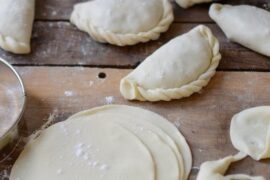
- Turn on and preheat the oven to 200°C (392°F) for at least 10 minutes. Divide the dough into 20 to 30 pieces, depending on the desired size of the dobladitas, and cover them with a clean kitchen cloth. Knead each piece individually with a rolling pin, forming a circle, and then fold it into four parts.
- Beat the egg in a small bowl and mix with a fork until smooth. Place the dobladitas on a lightly greased baking sheet, brush them with the beaten egg, and prick them with a fork. Transfer to the preheated oven and bake for about 15 to 20 minutes or until lightly golden. Serve the dobladitas fresh and warm, plain or accompanied with butter or filled with cheese, ham, or jams.
How to make dobladitas with cheese?
Undoubtedly, one of the favorite ways to enjoy dobladitas is with cheese. You can prepare a simple and delicious sandwich using your preferred type of cheese, such as fresh cheese, mantecoso cheese, goat cheese, or brie cheese, for example.
Tips for Perfect Dobladitas
The Folding Technique
After rolling each piece into a circle, fold in half, then fold again into quarters. Press the edges gently — the layering from the fold is what creates the characteristic flaky interior. Don’t flatten the folded shape too much before baking.
Prick Before Baking
Always prick the surface with a fork after brushing with egg wash. Without pricking, steam builds up inside and the bread balloons out, losing the distinct folded shape that defines a proper dobladita.
Serve Warm
Dobladitas are best eaten within minutes of coming out of the oven, when the crust is at peak crispiness and the inside is still warm and steam-puffed. They soften quickly as they cool.
Dobladitas – Fillings and Serving Guide
| Filling | Cheese / Ingredient | Best For |
|---|---|---|
| Classic (plain) | – | Serve with butter or pebre |
| With mantecoso cheese | Soft yellow Chilean cheese | Traditional onces (afternoon tea) |
| Ham and cheese | Ham + gouda | Quick lunch or snack |
| Goat cheese and honey | Goat cheese | Elevated appetizer |
| Sweet (with manjar) | Dulce de leche | Dessert or sweet snack |
Frequently Asked Questions (FAQs)
1. Can I make them using only butter?
Yes, you can replace the 100 grams of lard with an equal amount of extra butter. However, using the original combination of lard and butter is the ultimate technical secret: lard provides that beautifully crisp, short, and brittle exterior crust, while the butter infuses the crumb with an unmatched milky flavor and inner softness.
2. Why does the recipe call for baking powder if it’s not a cake?
Although this is essentially an empanada dough, a subtle touch of baking powder (4 grams) relaxes the gluten networks during baking, resulting in a crumb that is slightly airier, tender, and less rigid to bite into.
3. What is the best cheese to serve them with?
The ultimate companion for a piping hot dobladita is Chilean mantecoso cheese (preferably from the south, like Chiloé or Valdivia). Its high fat content allows it to melt into a beautiful, gooey stretch using just the residual heat of the fresh bread. They also pair wonderfully with local goat cheese, country ham, or fresh pebre sauce.
4. How do I store and reheat them?
Dobladitas are at their absolute peak within minutes of leaving the oven. If you have leftovers, store them in a paper or cloth bag. By the next day, they will have hardened slightly as the fats solidify. To bring them back to life, reheat them on a wire mesh toaster over low heat or in an electric oven—never use a microwave, as it will turn them rubbery and tough.
5. Can the dough be frozen?
Yes. You can freeze the rolled-out flat dough discs separated by plastic sheets for up to 2 months. When ready to bake, thaw them in the refrigerator, fold them into quarters, brush with egg wash, and bake directly in a preheated oven.
Did you know?
The history of dobladitas confirms that they are 100% Chilean bread. They are believed to have originated during the colonial period from the custom of making empanadas on Sundays. As there would often be leftover dough cut into circles, the habit developed of folding them into triangles and baking them directly in the oven.
How to adapt this recipe to a vegan or vegetarian version?
How to adapt this recipe to a gluten-free version?
How to adapt this recipe to a keto (ketogenic) version?
Recommended
- Completo Italiano (Italian-Style)
- Homemade Amasado Bread
- Conger Chowder (Caldillo)
- Chilean Milcao’s Chilotes Bread