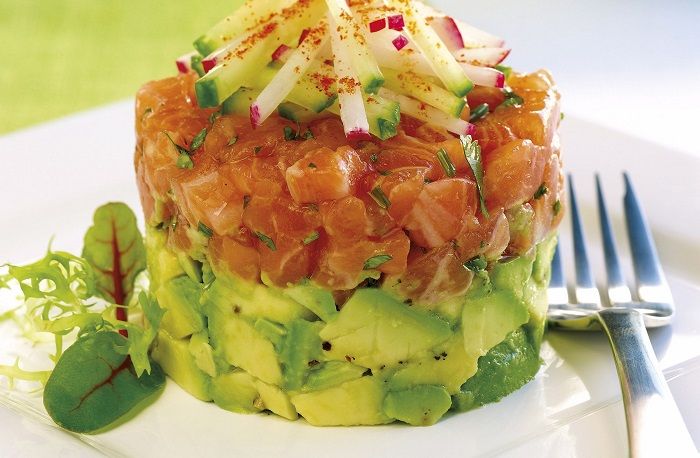
A magnificent and delicious recipe for Chilean tuna and avocado tartare, ideal for various occasions, with a simple yet elegant presentation, a refined dish with an Asian touch that you can even prepare a day in advance, so you only need to plate it when serving.
How to Make Chilean Tuna Tartare?
Tuna and avocado tartare is quick to prepare, with a simple and elegant presentation. If you use fresh tuna, make sure to freeze it for about 48 hours to avoid any food contamination, or if you use frozen tuna, thaw it in the refrigerator for at least 24 hours before preparing.
Nutritional Information
Each serving of tuna and avocado tartare contains approximately 250 calories, 10 g of carbohydrates, 18 g of fats, 15 g of proteins, 5 g of fiber, 1 g of sugars, 40 mg of cholesterol, and 500 mg of sodium.
Tuna and Avocado Tartare Recipe
Category: Appetizers
Preparation: 20 minutes
Servings: 2 people
Ingredients
- 300 g fresh tuna
- 3 tablespoons soy sauce
- 2 ripe avocados
- 1 teaspoon wasabi
- 1 scallion
- ½ key lime
- ½ teaspoon ginger
- Sesame oil
- Olive oil
- Sesame seeds
- Sea salt

Instructions
- Cut the scallion into very small cubes, chop the tuna into approximately 1 cm cubes, and set aside separately.
- In a large bowl, combine the soy sauce, 1 tablespoon of sesame oil, ginger, and a pinch of salt. Add wasabi to taste and mix everything together with a wooden spoon.
- Add the tuna and scallion to the bowl and mix gently to combine the aromas and flavors. Cover with plastic wrap and refrigerate for at least 30 minutes, ideally for 24 hours.
- Peel and chop the avocados into cubes, set aside in a medium bowl, and drizzle with lime juice. Sprinkle a pinch of salt, a splash of olive oil, and mix gently to avoid mashing the avocado.
- Use a cylindrical mold, place it on a large plate, and fill it in layers. First, add the avocado, filling at least half the total height, pressing gently with a spoon. Then add the tuna mixture and compact everything delicately before removing the mold, ensuring it maintains its shape.
- Serve the tuna tartare immediately, optionally garnishing the top with sesame seeds and/or a couple of crispy toasts.
Additional Tips
Food Safety with Raw Tuna
Always use sushi-grade fresh tuna or previously frozen tuna. Freeze fresh tuna at -20°C (-4°F) for at least 48 hours before using to eliminate potential parasites — most home freezers do not reach this temperature, so purchasing commercially frozen or sushi-grade tuna is the safest option. Thaw in the refrigerator, never at room temperature.
Building Flavors Without Overpowering
Start with 2 tablespoons of soy sauce and taste before adding the third — saltiness varies between brands. Add wasabi gradually and stir well between additions: the heat is cumulative and hard to correct once added. Use no more than 1 teaspoon of sesame oil to avoid masking the other flavors.
Plating for a Professional Finish
Use a 7–8 cm cylindrical mold for an elegant result. Press the avocado layer firmly but gently. Chill the assembled mold for 10 minutes in the refrigerator before unmolding to help it hold its shape. Unmold slowly, lifting straight up while holding the plate steady. Garnish with sesame seeds, microgreens, or a thin lime slice.
| Ingredient | Substitute | Notes |
|---|---|---|
| Fresh tuna | Sushi-grade salmon | Richer flavor, fattier texture |
| Avocado | Mango | Sweeter, tropical variation |
| Soy sauce | Tamari | Gluten-free option |
| Wasabi | Horseradish | Milder heat, more pungent |
Frequently Asked Questions (FAQs)
Is it safe to eat raw tuna in tartare?
Yes, provided you use sushi-grade fresh tuna or commercially frozen tuna handled following strict safety protocols. Avoid supermarket fresh tuna not designated for raw consumption. Pregnant women, elderly, and immunocompromised individuals should avoid raw fish preparations.
Can I make tuna tartare in advance?
The tuna marinade can be prepared up to 24 hours ahead and refrigerated. Assemble the tartare no more than 30 minutes before serving for the best texture. Drizzle avocado generously with lime juice and cover tightly with plastic wrap pressed directly against the surface if prepared ahead to prevent oxidation.
What can I serve with tuna and avocado tartare?
Crispy toast points, wonton crisps, or rice crackers are the classic accompaniments. A simple green salad or pickled ginger adds freshness. For a Chilean pairing, serve with a glass of cold Sauvignon Blanc from Casablanca Valley.
Can I substitute the avocado?
Yes. Mango adds a sweet, tropical counterpoint to the tuna. Cucumber provides a fresh, crunchy base. Guacamole (mashed rather than diced avocado) creates a smoother base layer that contrasts with the chunky tuna topping.
What Is Tuna and Avocado Tartare?
Tuna and avocado tartare is a refined cold preparation of raw tuna and avocado seasoned with Asian-inspired flavors — soy sauce, sesame oil, wasabi, and ginger — that has become a popular appetizer in Chilean restaurants and home kitchens. Assembled in a cylindrical mold to create an elegant layered presentation, it combines the buttery texture of Chilean avocado (palta) with the firm, clean flavor of fresh tuna, elevated by the umami depth of soy sauce and the subtle heat of wasabi.
History of Tuna and Avocado Tartare in Chile
Tartare as a technique arrived in Chile through French cuisine during the 20th century, as Chilean gastronomy was increasingly influenced by European culinary traditions. The combination with avocado — central to Chilean cuisine since Mapuche times — and Asian condiments reflects the modern fusion direction of contemporary Chilean cooking. Chile’s proximity to the Pacific Ocean and its strong fishing industry make fresh tuna readily available, allowing this internationally-inspired dish to become a staple of upscale Chilean restaurant menus and sophisticated home cooking.
Did You Know?
Tartare is a preparation traditionally made with raw meats and fish that is said to have originated with the nomadic Mongolian people. The Tatar horsemen would store meat under their saddles during long journeys until it was soft enough to eat, helping them survive the harsh conditions of the steppes.