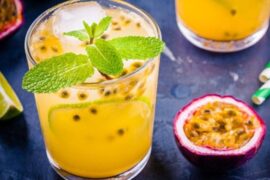
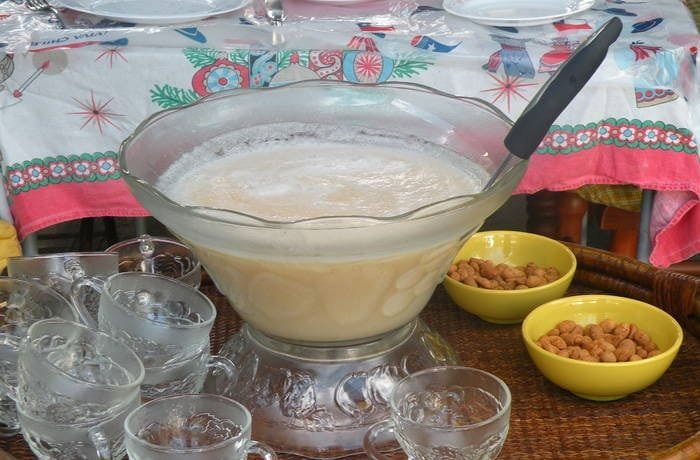
Chirimoya punch is a fresh and refreshing cocktail, very popular during the spring and summer seasons, especially during the celebration of Fiestas Patrias, Christmas, and New Year’s.
Nutrition Facts
Each serving of Chirimoya Punch contains approximately 400 kcal, 25 g of carbohydrates, 20 g of sugars, 3 g of fiber, 350 mg of potassium, 15 mg of vitamin C, and 10 mg of sodium.
How to Make Chirimoya Punch
Chirimoya punch is made with fresh fruits, which blend perfectly with very cold white Chilean wine, adjusting sweetness as needed.
Prep Time: 12 hours
Servings: 8
Ingredients
- 2 liters of Chilean white wine
- 2 chirimoyas (custard apples)
- Sugar or sweetener
Instructions
- Wash and peel the chirimoyas, remove the seeds, and reserve only the fruit pulp. Add the chirimoya pulp to a blender; blend for about 30 seconds until you obtain a smooth and homogeneous consistency.
- Pour the blended chirimoya into a punch bowl or a sufficiently large container and add the white wine. Gently stir with a spoon to integrate the ingredients, aromas, and flavors.
- Add sugar or sweetener to taste and stir until dissolved. Cover and let it rest in the refrigerator for at least 12 hours. Serve the chirimoya punch cold in small cups or wine glasses.
Expert Secrets for a “Royal” Chirimoya Punch
- Maceration and Esters: The 12-hour resting period is non-negotiable. This time allows for a process of osmosis where the ethanol in the wine extracts the aromatic esters from the chirimoya pulp. At a molecular level, the flavors “braid” together, creating a depth of taste that instant mixing cannot replicate.
- Enzymatic Browning Prevention: Chirimoya is rich in polyphenol oxidases, which cause the fruit to brown when exposed to air. By blending and immediately submerging the pulp in acidic white wine, the wine’s lower pH and Vitamin C act as inhibitors, preserving that pristine, creamy white color.
- Terroir Selection: For the best result, use a young Chilean Sauvignon Blanc or Chardonnay. The citrusy acidity and mineral notes of these cool-climate wines cut through the dense, custard-like texture of the fruit, preventing the punch from feeling “heavy” on the palate.
Frequently Asked Questions (FAQ)
1. Can I use sparkling wine instead of white wine?
Yes! Using a Chilean Brut or Extra Brut sparkling wine adds a festive effervescence. In 2026, the “Chirimoya Royal” (using sparkling wine) is a top trend for New Year’s celebrations.
2. How long can I store it?
While it can stay in the fridge for up to 48 hours, it is best consumed within 24 hours. After this window, the fruit fibers may begin to settle too much, and the fresh aromatics of the wine will start to dissipate.
3. Is there a kid-friendly, non-alcoholic version?
Absolutely. Replace the 2 liters of wine with chilled white grape juice or sparkling mineral water. Add a squeeze of lime to mimic the acidity of the wine and keep the punch refreshing.
4. What if I can’t find fresh Chirimoya?
In 2026, high-quality frozen pulp is widely available. If using frozen, ensure it is 100% natural with no added sugar. Defrost it slowly in the fridge before blending it with the wine to avoid “watering down” the punch with ice crystals.
Key Health Benefits
Chirimoya is one of the best fruit sources of vitamin B6 (pyridoxine). This vitamin is an essential cofactor in the synthesis of neurotransmitters such as dopamine and serotonin. Adequate intake of B6 has been scientifically linked to a reduction in symptoms of depression and anxiety by optimizing brain chemistry.
Did You Know?
Chirimoya is a fruit native to South America, originally grown in the Andean region shared by Colombia, Chile, Ecuador, and Peru, at altitudes ranging from 1400 to 2000 meters above sea level.