
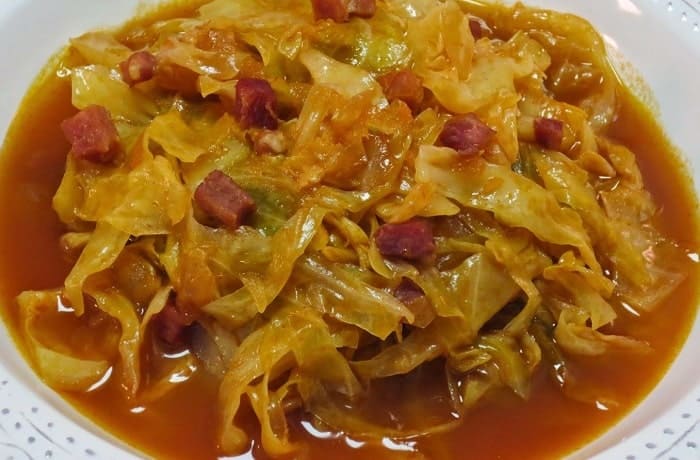
Don Fausto cabbage stew (guiso de repollo Don Fausto) is a Chilean one-pot dish of 300 g beef chuck, one whole cabbage, and half an onion braised in 250 ml of beef broth with cumin and oregano for 45 minutes — hearty, fast, and made from pantry staples. Each serving provides approximately 350 calories.
The dish takes its name from the protagonist of a beloved Chilean comic strip who ate this exact stew at his neighborhood restaurant every day — one of the few Chilean dishes named after a fictional character.
How to Make Chilean Don Fausto Stew?
The basic recipe is built around a single technique: browning the beef first over high heat to develop a crust, then adding the onion, spices, and broth before the cabbage goes in last. The cabbage releases a substantial amount of liquid as it cooks down — which is why the recipe calls for only 250 ml of broth rather than the larger quantities used in other stews. After 30 minutes of covered simmering at low heat, the cabbage will have reduced to roughly half its raw volume and absorbed the beef and spice flavors from the broth. The basic recipe works equally well with an optional sausage added in step 3, adjusting the salt downward slightly to account for the sausage seasoning.
Nutritional Information
Each serving of Don Fausto cabbage stew contains approximately 350 calories, 15 g of carbohydrates, 18 g of fats, 28 g of proteins, 5 g of fiber, 8 g of sugars, and 650 mg of sodium.
Don Fausto Cabbage Stew Recipe
Prep Time: 30 minutes
Cook Time: 45 minutes
Servings: 4
Ingredients
- 300 g beef chuck, cut into elongated pieces
- 1 medium cabbage, thick stems removed, cut into strips
- ½ onion, finely diced
- 250 ml hot water
- 1 beef broth cube
- 1 tablespoon fresh parsley, finely chopped
- 1 sausage, sliced (optional)
- ½ teaspoon dried oregano
- ¼ teaspoon cumin
- Oil, salt, and pepper to taste

Instructions
- Prepare all ingredients before cooking: cut the beef chuck into elongated pieces approximately 4 to 5 cm long, wash the cabbage and remove the thick central stems, cut into strips roughly 3 cm wide, and finely dice the onion. Set aside.
- Heat a large pot over high heat with a drizzle of oil. Add the diced onion and sauté, stirring frequently, until transparent — about 3 minutes.
- Add the beef pieces and the sliced sausage if using. Add the oregano and cumin and stir to coat everything in the spices. Cook over medium heat for 3 to 4 minutes until the beef is sealed on all sides and the spices are fragrant. Add the chopped parsley and stir for one more minute.
- Dissolve the beef broth cube in the 250 ml of hot water, stirring until no lumps remain. Pour into the pot, season with salt and pepper, and stir to combine.
- Add the cabbage strips on top of the meat. Cover the pot, reduce heat to minimum, and cook for 30 minutes. The cabbage will release its own liquid and reduce significantly in volume — do not add more water during this stage unless the pot appears dry after 20 minutes. Check and stir gently halfway through.
- When the meat is tender and the cabbage is soft and fully cooked, remove from heat and allow to rest uncovered for 5 minutes. Serve immediately, piping hot, alone or accompanied by white rice, golden potatoes, or French fries.
Additional Tips
Brown the beef before adding anything — the crust is the depth of the stew
The original instructions sauté the onion first and then add the beef — but for maximum flavor, reversing the order produces a better result: brown the beef pieces in a very hot pot with minimal oil for 2 to 3 minutes before adding the onion. The dry heat creates a Maillard crust on the beef surface that dissolves into the broth during the long simmer, giving the stew a darker color and more complex flavor than a stew where the beef is simply cooked through without browning. The onion can be added immediately after the beef is seared, in the same pot, without needing to be removed first.
Don’t add extra liquid — the cabbage releases its own
One of the most common mistakes with this stew is adding too much water. One medium cabbage contains approximately 92% water by weight — in a covered pot over low heat, it releases a substantial quantity of liquid as it cooks, which dilutes the broth and extends the cooking time required for the flavors to concentrate. The 250 ml of broth in this recipe is calibrated to account for that cabbage liquid. Start with the 250 ml, check after 20 minutes of covered cooking, and only add a small splash (50 ml maximum) if the pot looks genuinely dry. The finished stew should be moist but not soupy — the liquid level should be low, coating the vegetables rather than submerging them.
The sausage variation is the more common home version
While listed as optional, adding a sliced sausage (vienesa, longaniza, or Spanish chorizo) is the version most Chilean home cooks actually make. The sausage fat renders into the broth and seasons the entire stew, adding depth that the lean beef chuck alone does not provide. Spanish chorizo also contributes paprika, which tints the broth a warm orange color and shifts the flavor profile toward something closer to the original Arabic-influenced stews from which this recipe likely descends. If using a heavily seasoned chorizo, reduce the added salt to a pinch rather than seasoning to taste — chorizo releases a significant quantity of salt as it cooks.
| Ingredient | Substitution and result |
|---|---|
| Beef chuck | Pork ribs (costillar de cerdo) or longaniza — richer and fattier; longaniza seasons the broth similarly to the sausage variation |
| Green cabbage | Savoy cabbage — milder, more delicate flavor; cooks faster (20 minutes instead of 30); or Brussels sprouts halved (add in the last 15 minutes) |
| Beef broth cube | 250 ml homemade beef broth — richer and less salty; no need to dissolve; add directly to the pot |
| Sausage (optional) | Spanish chorizo — adds paprika oil and a smoky note; use 1 link sliced; reduce added salt significantly as chorizo is heavily salted |
Frequently Asked Questions (FAQs)
1. Why is this dish called “Don Fausto”?
The name comes from a Chilean adaptation of the American comic strip “Bringing Up Father” (created in 1913 by George McManus), which arrived in Chile in 1922 via the newspaper El Mercurio under the title “Amenidades del diario vivir.” In the Chilean version, the immigrant protagonist Jiggs was renamed Don Fausto, and his wife Maggie became Crisanta. Don Fausto’s defining character trait — shared with the original Jiggs — was his love for simple, humble food, specifically a meat and cabbage stew eaten at his favorite neighborhood restaurant “El Mono,” despite his family’s newly acquired social pretensions. The dish became associated with the character’s name and entered Chilean culinary vocabulary as “guiso Don Fausto.”
2. Can I add sausage or chorizo to the stew?
Yes — the recipe explicitly lists a sausage as an optional ingredient, and in practice the sausage version is the one most Chilean home cooks make. Slice the sausage into rounds and add it together with the beef pieces in step 3. Spanish chorizo is particularly effective because its rendered paprika oil tints the broth and adds a smoky depth. If using chorizo, reduce the added salt substantially — chorizo releases significant salt during cooking and can make the finished stew too salty if the seasoning is not adjusted.
3. What do you serve with Don Fausto stew?
White rice is the most traditional accompaniment — its neutral flavor absorbs the broth well and rounds out the meal. Golden fried potatoes (papas doradas) or French fries are equally common, particularly in the version served at traditional Chilean restaurants and fondas. Fresh crusty bread (marraqueta) for soaking up the broth is the simplest option. The stew can also be served as a standalone dish in a deep plate, with enough broth to eat as a near-soup with the meat and cabbage as the solid components.
4. How long does Don Fausto cabbage stew keep?
Refrigerated in an airtight container, it keeps for 3 to 4 days. The flavors deepen overnight — the stew is frequently better the next day once the cabbage has fully absorbed the broth and spices. Reheat over medium-low heat with a splash of water if needed to restore the original consistency. It can be frozen for up to 2 months, though the cabbage texture becomes softer after freezing. Thaw in the refrigerator overnight before reheating.
What Is Chilean Don Fausto Cabbage Stew?
Guiso de repollo Don Fausto is a Chilean braised stew of beef chuck and whole cabbage in beef broth, seasoned with cumin and oregano. It is one of the simplest and most economical stews in the Chilean home cooking repertoire — five main ingredients, a single pot, and 75 minutes of total time produce a hearty, filling dish with a depth of flavor disproportionate to its simplicity. The dish’s character is shaped by the interplay between the beef’s protein and fat, the natural sweetness of the cooked cabbage, and the concentrated beef broth in which both are braised. Unlike heavier Chilean stews, the Don Fausto maintains a relatively clean, vegetal quality — the cabbage dominates the finished bowl both in volume and flavor, with the beef providing structure and richness rather than overwhelming the preparation. It is considered “probably of Spanish influence and Arab origins” by Chilean food historians, reflecting the layered culinary heritage of stews featuring braised cabbage with spiced meat that were common in both medieval Spanish and North African cooking.
History of Don Fausto Stew in Chile
The preparation itself — braised meat with cabbage in spiced broth — has ancient roots tracing back through the medieval Spanish culinary tradition (olla podrida, cocido) to Moorish and ultimately Arab cooking, where braised meat-and-vegetable stews were foundational preparations. Cabbage arrived in Chile with Spanish colonial settlers in the 16th century and quickly became one of the most widely grown vegetables in the country’s central valley due to its cold tolerance and high yield. By the 19th century, beef-and-cabbage stews were common in Chilean working-class cooking. The name “Don Fausto” became attached to this preparation in the 1920s, after the Chilean adaptation of the American comic strip “Bringing Up Father” began publication in El Mercurio in 1922. In the strip, the newly wealthy protagonist Don Fausto (renamed from the original Jiggs) retained his working-class food preferences and regularly escaped his socially ambitious wife Crisanta to eat a humble meat and cabbage stew at his neighborhood restaurant “El Mono.” The character’s devotion to the dish made it iconic: readers identified the stew with Don Fausto, and the name entered everyday Chilean vocabulary as a descriptor for this specific preparation, one of the rare cases in any cuisine where a dish is named after a comic strip character.
Did you know?
The American comic strip “Bringing Up Father” was created in 1913 by George McManus (despite being English, he created it for an American audience), and it ran for over 87 years — until 2000 — making it one of the longest-running comic strips in history. When it arrived in Chile in 1922 via El Mercurio under the title “Amenidades del diario vivir,” the main characters were renamed Don Fausto and Crisanta for local audiences. Don Fausto’s favorite food — eaten at his beloved restaurant “El Mono” every time he could escape his wife’s social calendar — was a simple meat and cabbage stew, identical to the recipe on this page. The strip was so popular in Chile that the dish permanently inherited the character’s name, a phenomenon that makes this one of the very few culinary preparations in the world named directly after a fictional comic strip protagonist.