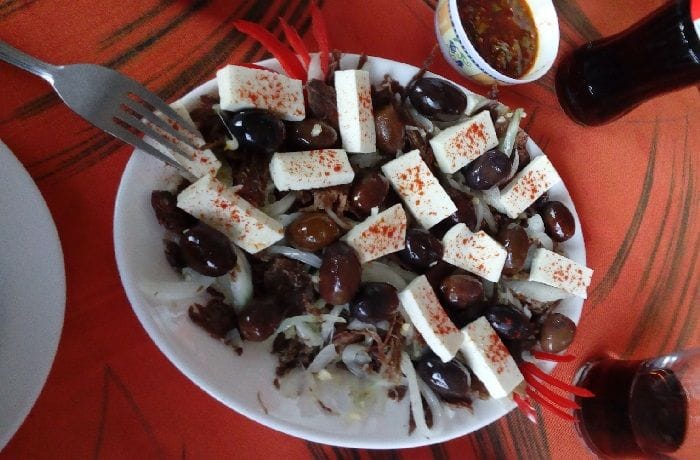
Chilean muleteer salad (ensalada del arriero) is a rustic Andean dish made with rehydrated charqui (dried meat), Huasco olives, goat cheese, and onion dressed with Pica lemon juice and olive oil. Ready in 60 minutes, each serving provides approximately 400 calories.
Originally carried by muleteers crossing the Andes, this recipe combines simple non-perishable ingredients into a salad with an intense, complex flavor unlike any other in Chilean cuisine.
How to Make Muleteer Salad?
The base of this salad is charqui — dried and salted meat that must be rehydrated in cold water for at least one hour before cooking. The onion should be softened with salt or hot water to remove its sharpness, allowing the other flavors to come through cleanly.
Nutritional Information
Each serving of Chilean muleteer salad contains approximately 400 calories, 8 g of carbohydrates, 28 g of fats, 30 g of proteins, 2 g of fiber, 3 g of sugars, and 820 mg of sodium.
Homemade Muleteer Salad Recipe
Prep Time: 45 minutes
Cook Time: 15 minutes
Servings: 6
Ingredients
- 500 g of Huasco olives
- 250 g of dried meat (horse, llama, mule, or donkey)
- 250 g of goat cheese
- 2 medium onions
- Olive oil
- Cilantro
- Pica lemon
- Salt
- Pepper
Instructions
- Hydrate the dried meat in a bowl covered with cold water for 1 hour. Drain and pat dry with paper towels. Set aside.
- Preheat the oven to 170°C (338°F) and cook the dried meat on a baking sheet for about 10 minutes. Remove and shred once cool enough to handle.
- Slice the onions thinly and soften them with salt or hot water. Set aside.
- Cut the goat cheese into small cubes. Set aside.
- In a large salad bowl, combine the shredded charqui with Pica lemon juice, salt, and pepper. Let sit for 5 minutes, then add the softened onion, goat cheese, and washed olives. Drizzle with olive oil and mix well.
- Let the salad rest refrigerated for 15 minutes, then serve immediately as an appetizer or side dish.
Additional Tips
Rehydrate the charqui for a full hour to draw out excess salt
Charqui is heavily salted during the drying process. A full hour of soaking in cold water significantly reduces the salt content and softens the meat to a workable texture. Change the water once halfway through if the charqui is particularly salty. Taste a small piece before seasoning the salad — you may need little or no added salt.
Soften the onion before combining to balance the intense flavors
Raw onion can overpower the charqui and goat cheese. Soaking sliced onion in salted water for 10 minutes or briefly covering it with boiling water mellows the sharpness while keeping the crunch. This step makes the final salad more balanced and easier to eat.
Let the assembled salad rest before serving
After mixing all ingredients, 15 minutes of refrigeration allows the lemon juice and olive oil to penetrate the charqui and marry with the goat cheese. The result is noticeably more cohesive than serving immediately after assembly.
| Ingredient | Substitution and result |
|---|---|
| Charqui (dried meat) | Beef jerky — closest widely available substitute; reduce soaking time to 30 minutes |
| Huasco olives | Kalamata olives — similar brine and size; slightly more intense flavor |
| Goat cheese | Feta cheese — similar crumble and saltiness; milder goat flavor |
| Pica lemon | Regular lemon — same acidity; Pica lemon is more aromatic but standard lemon works well |
| Cilantro | Flat-leaf parsley — milder and less assertive; suitable for those who dislike cilantro |
Frequently Asked Questions (FAQs)
1. What is charqui?
Charqui is a traditional Andean dried and salted meat, historically made from llama, horse, mule, or donkey. The technique of drying meat at high altitude was developed by pre-Columbian Andean cultures as a preservation method. The English word “jerky” derives from the Quechua word “ch’arki,” which is the origin of charqui.
2. Where can I find Huasco olives outside Chile?
Huasco olives come from the Atacama region of Chile and have a distinctive wrinkled skin and intense brine. Outside Chile, they can be difficult to find. Kalamata olives are the best substitute — similar in size, brine level, and curing style. Latin American grocery stores occasionally carry imported Chilean olives.
3. Can I use another type of dried meat?
Yes. Beef charqui is the most commonly available version in Chilean markets and works well in this recipe. Llama charqui, if available, gives a leaner and more gamey flavor closer to the traditional mountain version. Beef jerky from supermarkets can also be used after soaking, though the flavor profile is sweeter and less intense.
4. How long can muleteer salad be stored?
The salad keeps well refrigerated in an airtight container for up to 48 hours. The flavors deepen overnight as the lemon juice continues to marinate the charqui. Stir before serving and check seasoning — the olive brine tends to intensify with time.
What Does “Arriero” Mean?
Arriero is the Spanish word for muleteer — a person who drives mules or other pack animals to transport goods. In the Chilean Andes, arrieros were essential figures who crossed mountain passes carrying merchandise, livestock, and food supplies between Argentina and Chile. Charqui was their ideal travel food: lightweight, non-perishable, and high in protein.
History of Muleteer Salad in Chile
The muleteer salad originated along the Andean mule trails of central Chile, where arrieros combined their staple charqui with locally available ingredients — olives from the Atacama valleys, goat cheese from herders who grazed their animals in summer pastures, and wild herbs. The recipe evolved organically as each region contributed its own products. The Cajón del Maipo, a mountain canyon southeast of Santiago, was one of the most active arriero routes and remains closely associated with this dish.
Did you know?
The most famous Chilean muleteer in the world is Sergio Hilario Catalán Martínez, the first person contacted by the survivors of the Uruguayan Air Force crash in the Andes Mountains on December 22, 1972 — the disaster later known as the Miracle of the Andes.