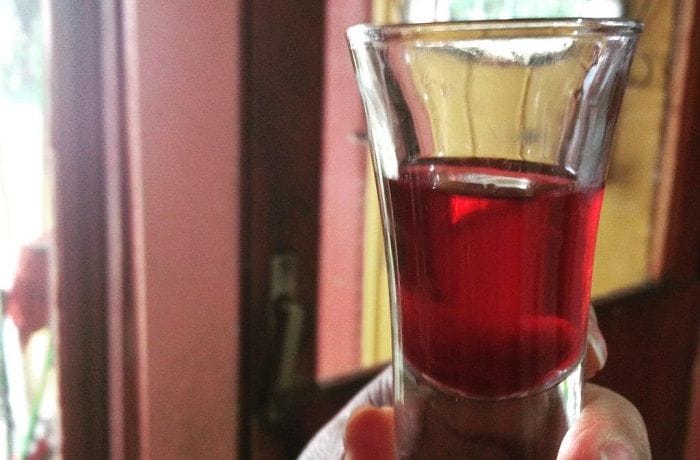
Chilean beetroot mistela (mistela de betarraga) is a homemade sweet liqueur made by cold-macerating 8 grated red beetroots with 500 g of sugar and 300 ml of water for 24 hours, then straining and combining the deep-red concentrated juice with 1 liter of aguardiente or pisco. It requires 30 minutes of active preparation and produces 12 small-glass servings.
The beetroot version is the most intensely colored mistela in the Chilean tradition — a deep jewel-red that makes it one of the most recognizable drinks at fiestas patrias celebrations and rural gatherings.
How to Make Chilean Beetroot Mistela?
The process has two stages: a 24-hour cold maceration that extracts the beetroot’s color, sugars, and earthy flavor into the sugar-water mixture, followed by straining and blending with the aguardiente base. No heat is used at any point — the sugar dissolves in water first to form a light syrup, and the beetroot releases its pigments and flavor through osmosis as it sits covered in the cold overnight. The finished mistela has an ABV of roughly 20 to 25%, depending on the original alcohol percentage of the aguardiente used, since the beetroot juice dilutes the base spirit by approximately half. It is ready to drink as soon as it is bottled, but flavor and color deepen noticeably after 2 to 3 additional days of rest in the bottle.
Nutritional Information
Each serving of beetroot mistela contains approximately 300 calories, 28 g of carbohydrates (predominantly sugar from the syrup), 0 g of fats, 0 g of proteins, and negligible sodium. The caloric content comes primarily from the added sugar and the alcohol in the aguardiente base.
Beetroot Mistela Recipe
Prep Time: 30 minutes (active) + 24 hours maceration
Cook Time: None
Servings: 12 small glasses
Ingredients
- 1 liter aguardiente or pisco
- 8 medium red beetroots (approximately 1.2 kg), peeled and finely grated
- 500 g cane sugar
- 300 ml water

Instructions
- Peel and finely grate all 8 beetroots directly into a large bowl or ceramic container. Fine grating maximizes surface area and extracts the maximum color and flavor during the maceration period — coarsely grated or diced beetroot produces a paler, less flavorful result.
- In a separate container, dissolve the sugar in the 300 ml of water, stirring until no granules remain. Pour the sugar syrup over the grated beetroot and stir to combine, making sure the beetroot is fully coated and submerged in the syrup.
- Cover the container tightly with plastic wrap or a lid and refrigerate for 24 hours. The sugar syrup will draw out the beetroot juices through osmosis, turning deep red and concentrating the flavor. Do not open or stir during this period.
- After 24 hours, strain the macerated mixture through a fine-mesh sieve, pressing firmly on the beetroot pulp with a spoon to extract all the liquid. For a clearer mistela, strain a second time through cheesecloth or a clean kitchen towel — this removes fine sediment and produces a more translucent, jewel-red liqueur.
- Combine the strained beetroot juice with the aguardiente or pisco, stirring gently to blend. The mixture will be a vivid deep red. Pour into clean, sterilized glass bottles and seal tightly.
- Store in a cool, dark place. Serve in small glasses (70 to 100 ml) as an aperitif before meals or as a digestif after. Serve at room temperature or lightly chilled. Best consumed within 6 months of bottling.
Additional Tips
Grate the beetroot as finely as possible — surface area determines color intensity
The depth of color in the finished mistela depends almost entirely on how much beetroot pigment (betalain) is extracted during the 24-hour maceration. Fine grating creates the maximum surface area for the sugar syrup to act on, drawing out more pigment and flavor than coarser preparation. A box grater on its finest setting, or a food processor with a fine grating disk, produces the ideal texture. If the beetroot pieces are too large, the finished mistela will be lighter in color — still pleasant but missing the deep jewel-red that defines the betarraga variant. Wear gloves when grating: beetroot pigment stains skin and fabric and is difficult to remove.
Dissolve the sugar in water before adding to the beetroot — not directly on the beetroot
Dissolving the sugar in the 300 ml of water first, rather than layering dry sugar directly over the grated beetroot, ensures the syrup coats the beetroot evenly from the start and prevents patches of undissolved sugar that can create uneven extraction. A light cold-water syrup (not heated) is sufficient: stir the sugar in the water for 2 to 3 minutes at room temperature until fully dissolved, then pour immediately over the beetroot. If the sugar does not fully dissolve in cold water within a few minutes, very briefly warm the water (not boil) just enough to accelerate dissolution, then allow it to cool completely before adding to the beetroot — warm syrup would partially cook the beetroot and alter the raw extraction flavor.
Strain twice for a clear, professional-looking mistela
A single pass through a fine-mesh sieve removes the large beetroot pulp but leaves fine sediment in suspension — the finished mistela will appear slightly murky rather than clear. For a cleaner result, perform a second straining through a double layer of cheesecloth or a clean linen kitchen towel placed over a large bowl. Allow the juice to drip through by gravity rather than squeezing — squeezing forces fine particles through the cloth. This second straining takes 10 to 15 minutes but produces a bright, jewel-clear liqueur that resembles a quality commercial spirit rather than a rustic home preparation. The sediment retained in the cloth is discarded. This step matters most if serving the mistela in clear glasses or as a gift — for home consumption the first straining is adequate.
| Ingredient | Substitution and result |
|---|---|
| Aguardiente | Pisco (Chilean, 35–40% ABV) — lighter and more floral base; a young, unaged pisco works best as the beetroot flavor dominates; premium aged pisco is wasted here as the oak notes are obscured by the beetroot |
| Cane sugar (500 g) | Honey (400 g) — warmer, more complex sweetness with floral undertones; slightly reduces shelf stability at lower alcohol concentrations; dissolve in the water as you would sugar before adding to the beetroot |
| Red beetroot | Only red beetroot produces the characteristic deep color — golden beets produce an amber-yellow mistela with a milder, less earthy flavor; a valid variant but a different drink entirely |
| Water (300 ml) | Use filtered or mineral water for longest shelf life — tap water with residual chlorine can introduce off-flavors during long maceration periods, particularly noticeable after several weeks of bottle storage |
Frequently Asked Questions (FAQs)
1. What is the difference between mistela and a pisco cocktail?
Mistela is a cold-macerated botanical liqueur — a category of preparation distinct from cocktails, which are mixed at serving time. The mistela is produced in advance (minimum 24 hours of maceration, then bottled), whereas a pisco cocktail (pisco sour, piscola, terremoto) is assembled to order from a fixed base spirit without maceration. Chilean mistela is closer in concept to Italian amaro, French liqueur, or homemade fruit brandy: it is the spirit itself that has been flavored, rather than a drink made with a neutral spirit. The sugar content and sweetness level of a mistela are also higher than most cocktails — it functions more as a liqueur than a mixed drink, served in smaller pours (70 to 100 ml) rather than a full cocktail glass.
2. How long does beetroot mistela last after bottling?
Properly bottled in sterilized glass containers and stored in a cool, dark place, beetroot mistela lasts 6 to 12 months. The alcohol content (approximately 20 to 25% ABV after dilution with the beetroot juice) acts as a preservative, inhibiting microbial growth. The main change over time is that the deep red color gradually fades to a brownish-red, and the earthy beetroot flavor integrates more fully with the aguardiente — many producers consider the mistela at its best after 1 to 2 weeks of bottle rest. Refrigeration extends the life and preserves the color better than room-temperature storage. If the mistela develops cloudiness, off-smells, or an acetone note, discard it.
3. Can I use pisco instead of aguardiente in the mistela?
Yes — the recipe explicitly lists pisco as an alternative to aguardiente, and the result is a slightly lighter, more aromatic mistela. Chilean pisco is a grape-based spirit aged in oak, which adds floral and fruity notes that complement the earthy beetroot. For this preparation, a young pisco corriente (the standard commercial grade, typically 35% ABV) works better than a premium aged pisco — the beetroot flavor is strong enough to dominate the spirit base regardless, and the subtle complexity of an expensive aged pisco is not distinguishable in the finished product. Peruvian pisco can also be used — it is slightly more aromatic and tends to be unaged or briefly rested, which makes it a closer match to aguardiente in neutrality.
4. What does beetroot mistela taste like?
Beetroot mistela tastes sweet with a distinct earthy undertone from the beetroot, over an aguardiente base that provides alcoholic warmth. The sweetness is prominent — 500 g of sugar in 12 servings makes this a notably sweet drink, comparable to a commercial fruit liqueur. The earthy, minerally quality of red beetroot comes through clearly in the mid-palate and lingers in the finish. There is no bitterness. The texture is slightly syrupy due to the residual sugar content. It does not taste strongly of alcohol in the way a straight pisco or aguardiente does — the sugar and beetroot juice dilute and mask the spirit base significantly, making it approachable for people who do not typically drink aguardiente neat.
What Is Chilean Mistela?
Chilean mistela is a category of homemade sweet liqueur produced by cold maceration of fruits, flowers, or vegetables in aguardiente or pisco with sugar, then bottling without further processing. It is the Chilean equivalent of a domestic fruit brandy or botanical liqueur — produced in home kitchens rather than distilleries, with no heating or distillation beyond the base spirit itself. The category includes dozens of variants: rose petals (mistela de rosas), celery (mistela de apio), cherry (mistela de cereza), coconut, orange peel, and the beetroot version on this page. The name “mistela” in the Chilean tradition is generally believed to derive from the “flor de la mistela” (Montiopsis umbellata), a small purple wildflower native to the Andean slopes of central Chile. When macerated in aguardiente, this flower releases a purple pigment that colors the liquor without altering its flavor — a purely visual effect that made it a favorite preparation for elegant social occasions during the colonial and early republican periods. Over time, the term expanded beyond the original flower preparation to cover any botanical maceration in aguardiente with sugar.
The beetroot variant is distinctive within the mistela family for two reasons: it produces the deepest, most saturated color of any common mistela (a vivid jewel-red from the betalain pigments in red beetroot), and it has the most pronounced flavor of any vegetable variant, with the earthy sweetness of beetroot dominating the aguardiente base more assertively than flower or citrus peel macerations. This intensity of color and flavor makes it the most visually striking and immediately recognizable of the Chilean mistelas, and the one most strongly associated with fiestas patrias (September 18) celebrations, where the deep red echoes the color of the Chilean flag.
History of Mistela in Chile
The term “mistela” (or “mistella”) has European roots — it originally referred to a blend of grape juice and alcohol used in winemaking to halt fermentation and preserve natural sweetness in the must. This product entered Spanish culinary culture through Italian winemaking practice during the medieval period. In colonial Chile, the term migrated to describe something different: the botanical maceration of local ingredients in aguardiente (the dominant distilled spirit of the colonial period, produced from grape pomace) with sugar, producing a sweet, flavored liqueur rather than a wine product.
During the colonial period and into the early Chilean republic, mistela was associated with domestic female production. Written accounts from the colonial era describe it as “characteristic of aristocratic ladies who consumed it in the afternoon shade of the grapevines in elegant crystal glasses” — a preparation made in the home, for home consumption, at a time when women controlled the production of preserved and fermented foods within the household economy. This domestic association persisted well into the 19th century, when mistela recipes appeared regularly in Chilean domestic manuals and cookbooks alongside instructions for preserves, confections, and other household preparations.
The beetroot variant likely developed in the 19th or early 20th century as beetroot cultivation expanded in central Chile. Red beetroot (betarraga) arrived in Chile with European settlers and became a staple salad vegetable across the country — one of the most widely consumed vegetables in Chilean cuisine alongside tomatoes and avocado. Its intense pigment made it a natural candidate for the mistela tradition, where visual spectacle was part of the drink’s social function. By the mid-20th century, mistela de betarraga had become firmly associated with the fiestas patrias celebrations of September 18 — its deep red color and sweet flavor making it a fixture of the fondas and family gatherings that define the Chilean national holiday.
Did you know?
The original mistela — the one that gave the entire Chilean category its name — was made from the flowers of Montiopsis umbellata, commonly called “flor de la mistela” or “flor del sol,” a small purple wildflower native to the Andean slopes of central Chile. When macerated in aguardiente, the flowers release a purple-pink pigment that colors the liquor without changing its taste — a purely visual effect prized at 19th-century social gatherings where the distinctive color announced the drink before it was served. There are dozens of varieties of mistela in the Chilean tradition, differentiated by color, flavor profile, and the season in which the primary ingredient is available: roses (pale pink, floral), celery (pale green, herbal), cherry (dark red, fruity), coconut (milky white, sweet), and orange peel (amber, citrus) are among the most common alongside the beetroot version. In traditional Chilean households, the preparation of mistela de betarraga for September 18 was a domestic ritual as fixed as making empanadas — the 24-hour cold maceration meant it was started the night of September 17 and ready by the morning of the celebration. Mistela recipes appear in Chilean domestic manuals from the early republican era (early 19th century), where they are consistently listed alongside fruit preserves and confections as part of the female domestic production tradition of the hacienda household.