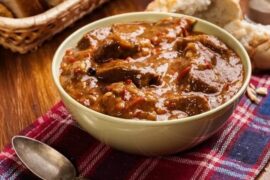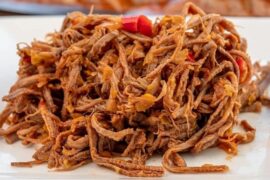
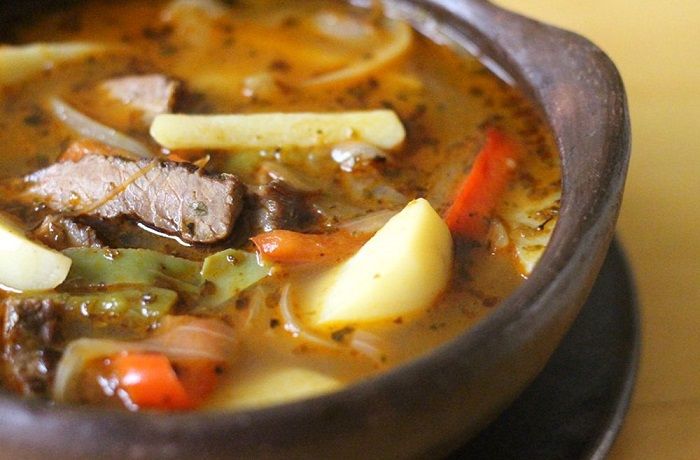
Chilean ajiaco is a thick beef and potato stew — 500 g of beef chuck browned and simmered with potatoes, carrots, onion, and bell pepper in 2 liters of beef broth, seasoned with paprika, cumin, and oregano — ready in 75 minutes. Each serving provides approximately 300 calories.
It is the classic “day after” dish in Chilean tradition: made from leftover asado (barbecue) beef after Fiestas Patrias or year-end celebrations, and widely regarded as tasting even better the second day once the broth has had time to deepen.
How to Make Chilean Ajiaco?
The key technique is browning the beef hard before adding the broth — 5 minutes over high heat until a dark crust forms on the surface. This Maillard reaction develops the complex, roasted flavors that distinguish a proper ajiaco from a simple boiled beef soup. If using leftover asado, skip the browning step and shred the meat directly into the sautéed vegetables before adding the broth. The potatoes should be sliced 5 to 7 mm thick — thin enough to cook through in the simmering broth without disintegrating, thick enough to hold their shape and provide texture in the finished stew.
Nutritional Information
Each serving of Chilean ajiaco contains approximately 300 calories, 25 g of carbohydrates, 15 g of fats, 15 g of proteins, 4 g of fiber, 5 g of sugars, and 800 mg of sodium.
Traditional Chilean Ajiaco Recipe
Prep Time: 30 minutes
Cook Time: 45 minutes
Servings: 6
Ingredients
- 500 g beef chuck, cut into small cubes or strips
- 2 liters beef broth
- 6 medium potatoes, peeled and sliced 5–7 mm thick
- 2 onions, sliced into half-rings
- 2 carrots, peeled and sliced
- 1 bell pepper, julienned
- 2 tablespoons vegetable oil
- 1 teaspoon paprika
- Dried oregano, cumin, salt, and pepper to taste
- Fresh cilantro or parsley to garnish

Instructions
- Heat the oil in a large, heavy-bottomed pot over medium-high heat. Add the beef in a single layer — do not crowd the pot. Cook without stirring for 4 to 5 minutes until a dark brown crust forms on the bottom. Turn and brown the other side for 2 more minutes. This step builds the base flavor of the stew.
- Reduce the heat to medium. Add the sliced onions, carrots, and julienned bell pepper directly to the pot with the beef. Stir to combine and cook for 5 minutes until the onions soften and become translucent.
- Add the sliced potatoes and the paprika. Stir to coat everything evenly. Season with salt, pepper, dried oregano, and a pinch of cumin. Mix well.
- Pour in the beef broth and stir to lift any browned bits from the bottom of the pot. Bring to a boil over medium-high heat, then reduce to a gentle simmer. Cook uncovered for 20 to 30 minutes until the potatoes are completely tender and the broth has reduced slightly.
- Taste and adjust seasoning. Serve hot in deep bowls, garnished with chopped fresh cilantro or flat-leaf parsley.
Chicken Ajiaco
The most common variation of the recipe substitutes the beef chuck with 500 g of boneless chicken breast or thigh. Cook the chicken over medium heat in the oil until sealed (3 to 4 minutes per side), then shred it with two forks before adding the vegetables. Use chicken broth in place of beef broth for consistency. The resulting dish is lighter in both color and flavor — a pale golden stew with a more delicate broth — but equally comforting. Chicken ajiaco is particularly popular as a weeknight version of the recipe when leftover asado is not available.
Additional Tips
Leftover asado beef is the traditional base — brown fresh beef hard if starting from scratch
The authentic version of Chilean ajiaco is made from the previous day’s grilled beef, shredded or cut into small pieces and added directly to the sautéed vegetables before the broth goes in. The asado fat and smoke residue left on the meat transfer into the stew, giving it a characteristic depth of flavor that is difficult to replicate with raw beef. If you are starting from scratch with fresh beef chuck, the closest equivalent is to sear it as hard as possible — high heat, no stirring, until a dark crust forms — before proceeding. Short rib or brisket, if available, produce the closest result to leftover asado in terms of final texture and fat content.
Slice potatoes to uniform thickness for even cooking
The potatoes are the structural element of the stew — they absorb the broth as they cook and become the primary source of body in the final dish. Slices should be uniform at 5 to 7 mm thick: thinner and they disintegrate into the broth after 20 minutes of simmering; thicker and they remain undercooked at the center while the broth and meat are ready. A mandoline or steady knife work both accomplish this. Use a floury variety of potato (like Yukon Gold or an all-purpose Chilean variety) rather than a waxy one — floury potatoes absorb the broth and thicken the stew slightly as they cook; waxy potatoes hold their shape but do not contribute to the consistency.
Ajiaco improves on day two — make a larger batch intentionally
Like most slow-cooked stews, ajiaco develops significantly in flavor after 12 to 24 hours of refrigeration. The broth thickens as the potato starch gelatinizes further when cold, the fat from the beef redistributes, and the cumin and oregano deepen into the liquid. This is not just folklore — it is the reason ajiaco became a day-after dish in the first place. If cooking for a gathering, make double the quantity the day before, refrigerate overnight, and reheat over medium-low heat with a splash of additional broth to loosen the consistency. The result is substantially better than a same-day preparation.
| Ingredient | Substitution and result |
|---|---|
| Beef chuck | Leftover asado beef (traditional) — shred directly, skip the browning step; or boneless short rib for a fattier, richer broth |
| Beef broth | Chicken broth — lighter, milder result; use for the chicken variation |
| Bell pepper | Ají amarillo paste (1 teaspoon) — adds chili heat closer to the dish’s etymological roots; markedly different flavor profile |
| Paprika | Merkén (Chilean smoked chili blend) — more complex, smoky, distinctly Chilean; use half the quantity as it is more intense |
Frequently Asked Questions (FAQs)
1. What is Chilean ajiaco made of?
Chilean ajiaco is a beef and vegetable stew made from beef chuck (or leftover asado), potatoes, carrots, onions, and bell pepper simmered in beef broth. It is seasoned with paprika, cumin, and dried oregano, and finished with fresh cilantro or parsley. The dish is specifically associated with leftover grilled beef from celebrations — traditionally consumed the morning after Fiestas Patrias (September 18) when surplus asado from the barbecue is shredded into the stew.
2. What is the difference between Chilean ajiaco and Colombian ajiaco?
Despite sharing a name, the two dishes are substantially different. Colombian ajiaco (particularly the Bogotá version) is a thick potato soup made from three varieties of potato cooked until one variety fully dissolves into the broth, thickening it naturally, with chicken, guascas herb, capers, and cream. It has no carrots or bell pepper. Chilean ajiaco is a broth-based stew with a clear liquid base, visible sliced vegetables, and beef as the primary protein. The shared name reflects a common colonial root — “ají” (chili) was used across Latin America to name any stew featuring chili as a dominant seasoning — but the two dishes diverged significantly in their regional evolution.
3. Can I make ajiaco with leftover barbecue beef?
Yes — this is the traditional method. Skip step 1 (the browning) entirely. Shred or chop the leftover asado beef into small pieces and add it in step 2, together with the vegetables. The pre-cooked, already-seasoned meat will break down further during the simmering stage and release its fat and flavor into the broth. The result is richer and more complex than a version made with raw beef because asado fat has already been rendered and carries smoke and caramelization compounds from the grill.
4. How do I store and reheat ajiaco?
Allow the stew to cool completely before transferring to an airtight container. Refrigerate for up to 4 days. The stew thickens considerably in the refrigerator — add a splash of water or broth when reheating over medium-low heat and stir until the desired consistency is restored. Ajiaco can be frozen for up to 3 months, though the potato texture changes slightly after freezing (becoming softer and less defined). Thaw in the refrigerator overnight before reheating.
What Is Chilean Ajiaco?
Chilean ajiaco is a thick, aromatic stew that occupies the same cultural role in Chilean cuisine as the French pot-au-feu or the Spanish cocido madrileño: a second-day dish that converts the remains of a festive meal into a deeply flavored restorative. The defining characteristic is its association with leftover asado — grilled beef from celebrations such as Fiestas Patrias (September 18) or New Year’s Eve barbecues is shredded into a broth the following morning, creating a hearty stew from ingredients that would otherwise go to waste. The name derives from “ají” (chili pepper), though the Chilean version uses only a moderate amount of paprika and cumin rather than fresh chili — it is the colonial descendant of more chili-forward preparations that circulated under the same name across pre-Hispanic and early colonial Latin America.
History of Chilean Ajiaco
The word “ajiaco” is derived from “ají” (chili pepper, from the Taíno language) combined with the Spanish suffix “-aco,” which in colonial usage was applied to dishes where chili was the principal seasoning. The term was already in use across the Caribbean and the Andean region before European contact — the Taíno in the Caribbean and Andean communities both prepared chili-based stews to which the name was applied by Spanish chroniclers during the 16th century. As the dish traveled and adapted through the colonial period across Latin America, it developed distinct regional identities: the thick potato soup of Bogotá, the corn-thickened stew of Cuba, the multiple-potato version of Lima, and the leftover-beef stew of Chile. The Chilean version diverged specifically because of the central importance of the asado in Chilean social life. Open-fire cooking of large beef cuts for communal celebrations was established practice by the 18th century, and the systematic repurposing of leftover grilled meat into a broth-based stew the following day was a natural outcome of that tradition. Ajiaco became inseparable from Fiestas Patrias — the national celebration established in 1810 — as the designated morning-after dish that completed the two-day arc of the celebration.
Did you know?
The term “ajiaco” is considered one of the oldest dish names in continuous use across Latin America — documentation of variations appears in chronicles from the 16th century in both the Caribbean and the Andes. Despite sharing the name across Peru, Colombia, Mexico, Cuba, and Chile, the dishes have diverged so significantly that they share almost no ingredients in common beyond the historical connection to chili as a primary seasoning. The Chilean version is the only one where the chili element has largely disappeared from the recipe — replaced by paprika and cumin — while the leftover-meat character has become the defining identity of the dish.