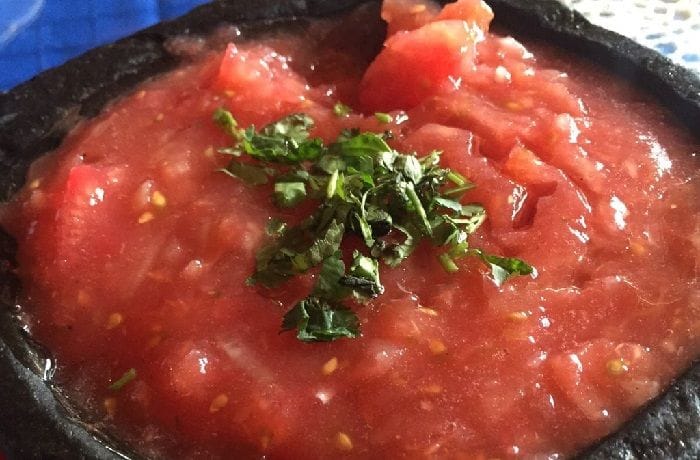
Chilean Chancho en Piedra is a sauce originating from the Maule region, born from the hands of agricultural workers who, after finishing their workday, would wash their shovel in a water channel and then crush (pound) tomatoes, garlic, and chili peppers on it with a stone and enjoy the mixture with their daily ration of bread.
Nutrition Facts
Each serving of Chancho en Piedra contains approximately 65 kcal, 1.2 g of protein, 3.5 g of fat (0.5 g of saturated fat), 0 mg of cholesterol, 8 g of carbohydrates, 4 g of sugars and 210 mg of sodium. (*)
(*) Estimated values based on a standard recipe using medium tomatoes and a drizzle of vegetable oil; actual values vary with portion size and oil quantity.
How to Make Chancho en Piedra
To prepare a good Chancho en Piedra, it is recommended to use ripe and peeled tomatoes. Add the chopped ingredients—garlic, chili peppers, salt, and pepper—to the mortar to achieve a good incorporation and create a sauce.
Prep Time: 10 minutes
Servings: 4 people
Ingredients
- 2 ripe tomatoes
- 2 garlic cloves
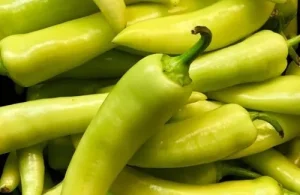
- 2 green chili peppers
- Sunflower oil
- Salt
- Pepper
Instructions
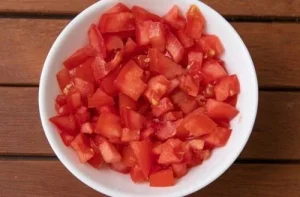
- Wash and peel the tomatoes, chop them into medium-sized cubes, and set them aside in a medium bowl. Wash the chili peppers, open them to remove the seeds, and chop them into small pieces. Set them aside.
- In a stone mortar, place the garlic, salt, and pepper to taste, and crush them until a paste is formed. Add the chopped chili peppers and continue crushing until well combined.
- Add the chopped tomatoes and continue crushing and stirring until the desired consistency is reached. Adjust the salt and pepper, and add a drizzle of sunflower oil.
- Serve the Chancho en Piedra immediately, freshly prepared, accompanied by sopaipillas (fried dough), marraquetas (Chilean bread rolls), or pan amasado (homemade bread).
Keys for a Perfect Chancho en Piedra
- Sequential Crushing: Always start with the garlic and salt to create a base paste. Add the chili peppers next, and only add the tomatoes at the very end. This ensures the aromatics are fully integrated before the high water content of the tomatoes makes the crushing process more difficult.
- Neutral Oil Choice: Stick to sunflower or vegetable oil. While olive oil is popular in other salsas, its strong flavor can overshadow the delicate balance of fresh tomato and green chili that defines an authentic Chancho en Piedra.
Frequently Asked Questions (FAQ)
1. Why is it called “Chancho en Piedra”?
The name is likely a phonetic deformation of “Chanco en Piedra” (chanco meaning “crushed” in local dialect). Over time, it became Chancho (pig), leading to the popular imagery of the sauce, even though it contains no pork.
2. Can I make it in a blender?
Technically yes, but it won’t be Chancho en Piedra. A blender aerates the tomatoes and creates a frothy, liquid soup. The traditional stone mortar keeps the juices intact and provides a rustic, thick texture.
3. How do I control the spice level?
The heat lives in the seeds and veins of the green chili. For a milder version, remove them entirely; for an authentic “kick,” include the seeds during the crushing process.
4. What is the best bread to serve it with?
Traditionally, it is enjoyed with Pan Amasado (homemade lard bread), Marraquetas, or freshly fried Sopaipillas. It is also delicious as a topping for fresh white cheese.
Did You Know?
The use of a volcanic stone mortar was introduced once this crushed tomato and chili mixture made its way into the kitchen, and the name “Chancho en Piedra” was established as a phonetic deformation of “Chanco en Piedra.”
How to adapt this recipe to a vegan or vegetarian version?
How to adapt this recipe to a gluten-free version?
How to adapt this recipe to a keto (ketogenic) version?
Recommended
- Chilean Chicken Soup Recipe
- Chilean Warm Mulled Wine Recipe
- Traditional Chilean Salad Recipe
- Homemade Dobladitas Bread