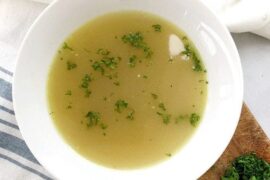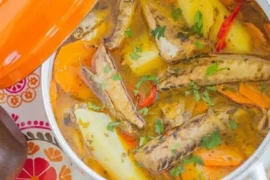
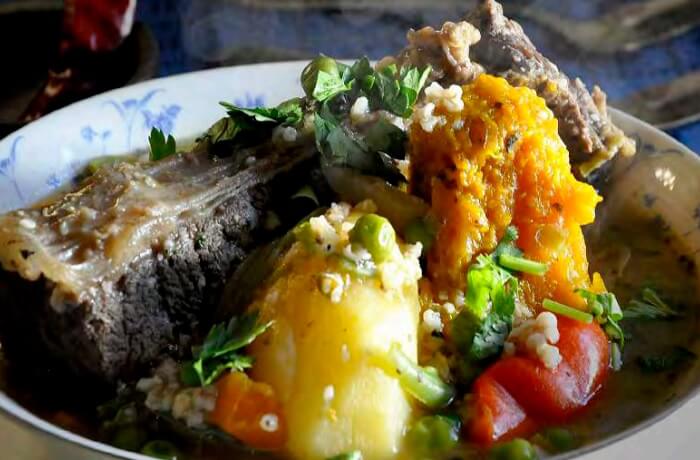
Mapuche horse stew (cazuela de caballo) is a traditional slow-cooked broth with large pieces of horse meat, potatoes, pumpkin, chuchoca, and seasonal vegetables. Ready in 90 minutes, each serving provides approximately 400 calories.
Originally prepared for Mapuche ceremonies and communal gatherings, this stew remains a living culinary tradition in the Araucanía region, where horse meat can still be found in traditional butchers in Temuco.
How to Make Horse Stew?
Traditionally, this stew is made with “tumbas de caballo” — large cuts from the area around the horse’s spine that are particularly rich in collagen and flavor. The broth develops slowly over 60 minutes, producing a clear, deeply savory base. Chuchoca (dried and toasted maize flour) is added at the end to lightly thicken the broth.
Nutritional Information
Each serving of Mapuche horse stew contains approximately 400 calories, 30 g of carbohydrates, 12 g of fats, 38 g of proteins, 5 g of fiber, 4 g of sugars, and 480 mg of sodium.
Homemade Horse Stew Recipe
Prep Time: 30 minutes
Cook Time: 60 minutes
Servings: 6
Ingredients
- 2 kg horse meat (tumbas de caballo)
- 6 medium potatoes
- 6 pieces of pumpkin
- 6 tablespoons chuchoca (maize flour)
- 3 cloves of garlic
- 1 large carrot
- 1 cup peas
- 1 cup green beans
- 1 medium onion
- 1 large bell pepper
- 1 celery stalk
- Fresh cilantro, chopped
- Oregano
- Salt
- Pepper
Instructions
- Cut the horse meat into six pieces, wash thoroughly in cold water, and drain. Set aside.
- In a large pot, heat a splash of oil over medium-high heat. Add the horse meat, quartered onion, bell pepper, chopped carrot, and garlic. Sauté for a few minutes, stirring, then cover with 2 liters of cold water. Increase heat and bring to a boil. Skim any foam that rises to the surface.
- Add the celery stalk, peas, and green beans. Season with salt, pepper, and a pinch of oregano. Stir gently, bring back to a boil, and cook covered for about 20 minutes.
- Add the whole potatoes and pumpkin pieces. Bring to a boil and cook for another 30 minutes until the potatoes are tender.
- Add the chuchoca and cook for an additional 5 to 10 minutes until everything is well-cooked and the broth has lightly thickened. Remove from heat and rest for 2 minutes.
- Serve immediately in large deep bowls, piping hot, with freshly chopped cilantro scattered over the broth.
Additional Tips
Request “tumbas de caballo” at the butcher for the best broth
The spine-area cuts contain a high proportion of bone and connective tissue that releases collagen during the long cook, producing a richer, more gelatinous broth than lean muscle cuts. If tumbas are unavailable, ask for any bone-in horse meat cuts — the bone is essential for depth of flavor.
Skim the broth during the first boil for a cleaner stew
In the first 10 minutes of boiling, grey foam rises to the surface from proteins in the meat. Removing this foam with a ladle results in a clearer, less bitter broth. This step is especially important with horse meat, which produces more foam than beef due to its lower fat content.
Add chuchoca at the very end to avoid over-thickening
Chuchoca continues to absorb liquid even after the pot is off the heat. Add it in the last 5 to 10 minutes of cooking and serve promptly — if the stew rests too long, the chuchoca will thicken the broth to a porridge-like consistency. If this happens, add a ladle of hot water and stir before serving.
| Ingredient | Substitution and result |
|---|---|
| Horse meat | Beef chuck or brisket — similar texture for slow cooking; slightly fattier broth |
| Chuchoca (maize flour) | Fine cornmeal or polenta — same thickening effect; add in small amounts to control consistency |
| Pumpkin | Butternut squash — same sweetness and density; holds its shape equally well |
| Green beans | Broad beans (habas) — traditional Mapuche alternative with a creamier texture |
| Celery stalk | Celery root (celeriac) — more intense flavor; use a quarter of a root, diced |
Frequently Asked Questions (FAQs)
1. Where can I find horse meat?
In Chile, horse meat is available at traditional equine butchers (carnicerías de caballo) found in the city center of Temuco and in some markets in Santiago and other cities. Outside Chile, it is sold in specialist butchers in France, Belgium, Italy, Canada, and parts of Latin America. In countries where it is not commercially available, beef chuck is the closest practical substitute.
2. What is chuchoca?
Chuchoca is dried and toasted corn (maize) flour made from specially treated corn kernels. It is a traditional Mapuche ingredient used to thicken stews and soups, adding a mild corn flavor and a slightly grainy texture to the broth. It can be found in Chilean specialty stores and some Latin American markets. Fine cornmeal or polenta is the best substitute.
3. How does horse meat taste compared to beef?
Horse meat is leaner than beef, with a slightly sweeter, more delicate flavor. It is less marbled with fat, which means the broth it produces is lighter and less rich than a beef stew. The texture of slow-cooked horse meat is tender and fibrous, similar to slow-braised beef short rib.
4. Can I make this stew with beef instead?
Yes. Beef chuck or brisket cut into large pieces is the most practical substitute. Use the same quantities and cooking times. The resulting stew will be slightly richer and fattier than the original but structurally identical. Add the same vegetables and chuchoca as specified.
What Is Mapuche-Style Cazuela?
Cazuela is the Spanish word for a slow-cooked broth with meat and vegetables, served in deep bowls — one of the most common formats in Chilean home cooking. The Mapuche version incorporates chuchoca, an indigenous corn ingredient that lightly thickens the broth and adds a distinctive toasted corn flavor not found in standard cazuelas. “Mapuche style” also refers to the ceremonial and communal context in which this stew was traditionally prepared, distinguishing it from everyday preparations.
History of Horse Stew in Mapuche Cuisine
Horse meat entered Mapuche cuisine after the Spanish introduced horses to Chile in the 16th century. The Mapuche adopted horsemanship with remarkable speed, and horses became central to their culture, warfare, economy, and diet. Horse meat was consumed during important ceremonies: the nguillatun (a collective religious ceremony) and the eluwün (a Mapuche wake), where the stew was prepared communally for large gatherings. Today, horse meat remains available in traditional butchers in Temuco, the capital of the Araucanía region and the historical heart of Mapuche territory.
Benefits of Consuming Horse Meat
Horse meat is an excellent source of lean protein, providing a high protein-to-fat ratio compared to beef or pork. It is also a significant source of iron, an essential mineral that participates in the formation of red blood cells and supports oxygen transport in the body. Its lower fat content makes it a nutritionally dense option for high-protein diets.
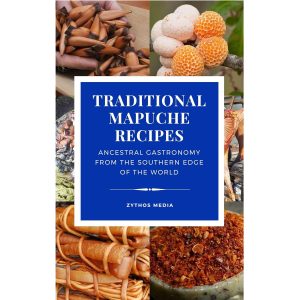
Did you know?
The Mapuche horse stew was a common preparation used in ceremonies such as the nguillatun (a collective religious ritual) and the eluwün (a Mapuche wake). These communal meals reinforced social bonds and honored ancestors — food preparation was inseparable from spiritual and community life in Mapuche culture.