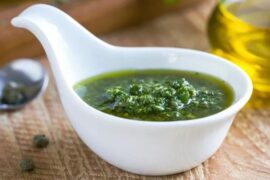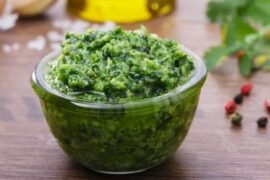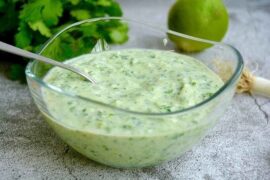
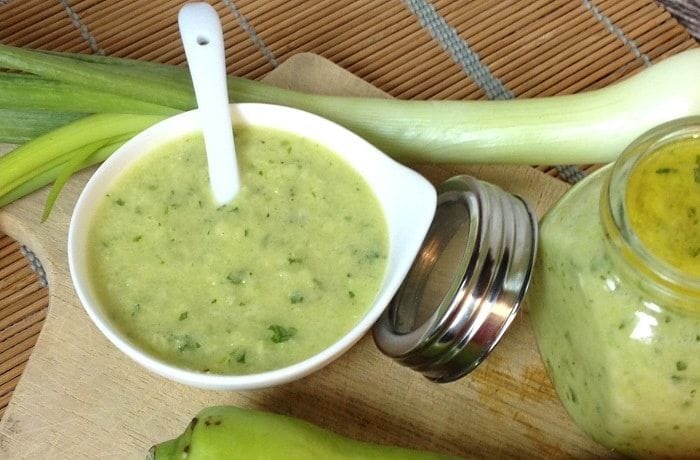
The Chilean green chili paste (ají verde en pasta) is the most versatile and beloved condiment of the Chilean table. As artisanal sauces and respect for rural ingredients have taken center stage in both urban and countryside kitchens, this paste stands out for its unique vegetal freshness. It is an aromatic experience that can elevate a traditional cazuela, wake up a fresh sopaipilla, or add a bold character to a warm empanada.
Nutrition Facts
Each serving of Chilean green chili paste sauce contains approximately 45 calories, 6 g of carbohydrates, 1.8 g of fats (0.3 g of saturated fats), 1.5 g of proteins, 1.2 g of fiber, 2 g of sugars, and 180 mg of sodium.
How to Make Chilean Green Chili Paste
The consumption of chili is a common practice in rural communities, and with this recipe, the aim is to balance the spiciness to allow it to be consumed by a greater number of people.
Prep Time: 30 minutes
Cook Time: 10 minutes
Servings: 6
Ingredients
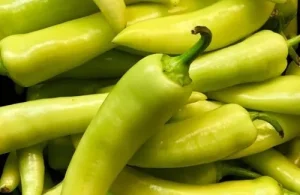
- 1 kg of green goat horn chilies
- 2 garlic cloves
- 1 teaspoon of coriander seeds
- Salt
- Pepper
Instructions
- Wash the chilies thoroughly in cold water, dry them, and toast the skin over hot coals or a gas stove flame. Peel them and set them aside. Place the peeled chilies on a grinding stone and crush and grind them in circular motions until you obtain a fine paste.
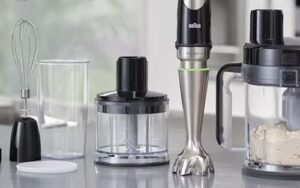
- Alternatively, blend the chilies in a blender or using an immersion blender. Add the garlic cloves and coriander seeds, grind or process again, adjust the consistency with hot water as desired, and season with salt and pepper to taste.
- Pour the mixture into clean and sterilized glass jars, filling them up to 1 to 2 centimeters from the edge. Fill with sunflower oil or olive oil and cover. Consume the green chili paste within up to a year as an accompaniment to various meals and sandwiches.
Additional Tips
- If you prefer a milder paste, remove the seeds and inner membranes of the chilies before grinding, as this is where most of the capsaicin is concentrated.
- Always use clean utensils when serving the paste, and keep the surface fully covered with oil to prevent oxidation and unwanted microbial growth.
Frequently Asked Questions (FAQ)
1. What type of green chili works best for this recipe?
Traditional goat horn chilies are ideal due to their balance of heat and vegetal flavor, but other medium-heat green chilies can be used if needed.
2. Can this paste be frozen instead of stored in oil?
Yes, the paste can be frozen in small portions for up to 6 months without significant loss of flavor or heat.
3. Is this sauce meant to be cooked before serving?
No, it is typically consumed raw as a condiment, but it can be added to cooked dishes near the end of preparation.
4. How spicy is Chilean green chili paste compared to other chili sauces?
It is generally moderately spicy, focusing more on freshness and aroma rather than extreme heat.
5. What foods pair best with green chili paste?
It pairs well with grilled meats, seafood, sandwiches, empanadas, and traditional Chilean stews.
Benefits of Consuming Chili
Spicy foods stimulate the release of endorphins, small proteins produced in the brain that cause a general sense of well-being. Laboratory experiments have shown that the active components of chili accelerate metabolism, causing our body to burn more energy and fats.
Did You Know?
The burning sensation in the mouth caused by chili is triggered by a chemical compound called capsaicin, which, upon contact with saliva, binds to taste bud receptors called TRPV1, causing irritation.